
Also by this author: Ten Words to Live by: Delighting in and Doing What God Commands
Published by Crossway on July 21, 2026
Genres: Non-Fiction, Christian Life
Buy on Amazon
Goodreads

In This Biblical Meditation, Jen Wilkin Offers Christians a Compelling and Hopeful Perspective on Aging and the Aged
The world tells us at every turn that aging is a steep descent into irrelevance, one to be avoided at all cost. This false story diminishes not only us but our elders and the time God gives us. But Scripture reveals a markedly different pattern of life, one of increasing value, that calls us to embrace our age and number our days rightly.
In this extended exploration of aging, Jen Wilkin draws poetic parallels between the first half of life and the second. Exploring the changing realities of caregiving, abilities, and potentiality, she helps us to trace God’s give-and-take design at every stage. Wilkin offers practical insights on body image, honoring the elderly, the essential value of family, and more. She urges us to trade an anti-aging mindset for the pursuit of biblical wisdom, encouraging believers to lean into―not fight―their place in the true story of the arc of life.
A Biblical Perspective on Aging: This book is a thought-provoking resource for those in their 20s, middle age, and beyond
Thoughtful: Using the metaphor of a chiastic poem, Wilkin explores the symmetry of life and helps us find value in each stage
Practical Application: Invites Christians to reject the world’s lies about age, pursue wisdom, steward their time well, and serve others as image bearers of God
Written by Bestselling Author Jen Wilkin: Author of None Like Him; In His Image; Women of the Word; and more
Aging is an often-ignored topic in Christian living books. The Christian publishing industry tends to emphasize youth and relevance, just like in the broader culture, and people try to avoid thinking about aging. This new book from Bible teacher and author Jen Wilkin fills an important gap, exploring the topic of aging from a Christian perspective. Wilkins challenges anti-aging philosophies and shows what the Bible has to say about this topic, and she encourages Christians to reject the idea that someone’s value lies in their youth, beauty, or usefulness to society.
Wilkin reflects that aging is a privilege, and that every stage of our lives matters to God. She encourages readers that even though it is painful to lose one’s independence and physical abilities, old age is still an opportunity for spiritual growth and inner transformation. Wilkin often repeats the refrain, “Bodies decline, people develop.” She also presents that caring for the elderly is a natural and sacred charge, not a shocking burden.
The chapters in Dust to Dust focus on different stages of life. Wilkin notes the symmetry of the human lifespan, exploring the similarities between birth and death, one’s first and final years, and “the gaining and losing of ability and possibility” during adolescence and senior adulthood. The chapter on early adulthood and late adulthood focuses on caregiving themes that are common during those life stages. A chapter at the end focuses on midlife. In the midlife chapter, Wilkin addresses questions and issues related to body image and cosmetic procedures, and she offers helpful perspectives without being prescriptive.
This book is excellent overall, but I have a few reservations to note. One is that Wilkin barely scratches the surface related to body image and aging, and I wish that she had delved further into this topic. Also, even though wrote this book for the church at large, not just for women, she writes as if body insecurities are exclusively a woman’s struggle. Although body image issues are more pervasive and extreme for women, men also deal with them, especially when it comes to aging. I wish she had included men in this discourse.
Also, some repeated references to us being both body and soul seemed to undermine the significance of the bodily resurrection. Although Wilkin occasionally makes reference to our future resurrected bodies, she seems to separate the body and soul in a way that seems more cultural than biblical. Our bodies are an integrated part of who we are, not just the outer vessel for a spirit. On another note, when Wilkin writes about age revealing more of who we are, I wish she had given a quick caveat. Age normally does intensify and expose someone’s true character, but mental disorders and forms of dementia can severely alter someone’s frame of mind and behavior, in ways that do not reflect who they really are as people.
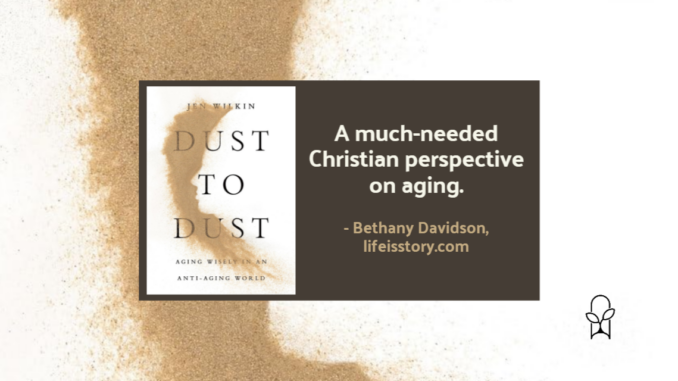
Dust to Dust: Aging Wisely in an Anti-Aging World offers a much-needed Christian perspective on aging and eldercare. Wilkin’s thoughtful approach will help and encourage readers in many stages of life. People who are struggling with fears about their own aging, or who are moving into new phases of caring for aging loved ones, will find this book especially helpful. This book is also an excellent choice for church groups to read together, since it includes thoughtful discussion questions and community-focused applications.