
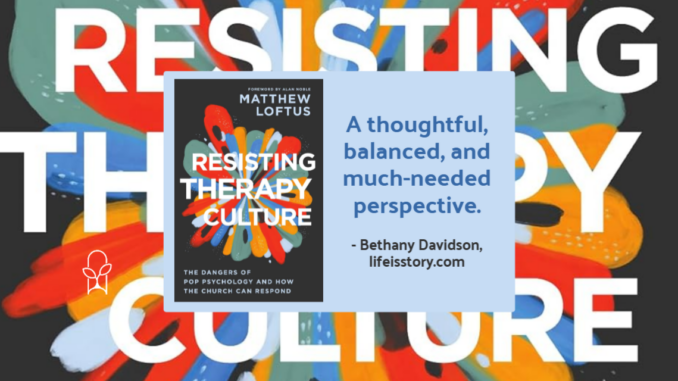
Published by IVP on August 18, 2026
Buy on Amazon
Goodreads

Let Churches Be Churches and Therapists Be Therapists
We live in an age where "therapy culture" dominates our cultural milieu. Everywhere we look, therapeutic language and psychological concepts are popularized, misapplied,and lose their medical significance. Therapy and psychiatry are good practices, but when people begin to filter everything in life through a therapeutic lens, it becomes harmful rather than helpful.
The church is not immune to this phenomenon. Increasingly, people's expectations of the church and its leaders are viewed through the lens of psychological health and wellness.
In this book, Matthew Loftus unpacks how this kind of "therapy culture" can distort the Christian life. He argues that the church cannot do for people what therapy and psychiatry are designed to do. While church should be a place of healing and love for people who are suffering from mental illness, churches and their leaders should focus on what they are called to do: bringing people together to worship God.
What you'll get with Resisting Therapy Culture:
An understanding of the role of the church in supporting people through mental health struggles
A deeper appreciation for the expertise and value of mental health professionals
Insight into how both therapy and the church can be good for Christians' spiritual and mental health in their own intended ways
Encouragement for church leaders to renew their focus on leading people in worshipThis book is an invitation for church leaders to focus on what the church does best. As Loftus explains, "People will live healthier lives when churches and therapists are working well, but the two do not have the same mission, methods, mandates, or measures of success. . . . Both should do the very best that they can in the sphere of work that God has assigned."
This unique, thought-provoking book addresses the excesses of pop psychology in society and in the church. Matthew Loftus writes with sincere and heartfelt sympathy for people who suffer from mental disorders, and this book does not dismiss the realities of trauma or mental illness, which he himself has suffered from. However, he challenges the phenomenon of “therapy culture,” in which people look to the values, beliefs, and principles of modern therapy as their guiding light for all of life. Loftus points out that even though advocates of therapy culture will treat their beliefs as unquestionable and scientifically proven, pop psychology sometimes substantially misrepresents current science and clinical best practices. He also points out that science and best practices also change over time, and that we shouldn’t look to them for authoritative guidance on what it means to live a good life.
I found Resisting Therapy Culture thoughtful and well-reasoned throughout. One of its strengths is how Loftus not only shows the lack of alignment between some trendy mental health discourse and Christian teaching, but demonstrates how these flawed ideas lead to worse outcomes for people over time. Loftus challenges his readers to consider that even though mental health care is necessary and helpful for many people, the beliefs and values of therapy culture can also lead people into deeper unhappiness and dysfunction, especially if they give up a sense of personal agency.
Loftus urges Christian churches to base their teaching and ministry on the Bible, instead of watering down Scripture to align themselves with trends in mental health discourse. He provides a thoughtful analysis of multiple key topics, such as how mental health intersects with one’s moral choices, the meaning of suffering, and the relationship between Christianity and psychology over generations. This book warns against turning all experiences of human struggle into a medical issue requiring professional treatment, and it also encourages churches to focus on their calling and mission, while leaving therapy to therapists.
The latter theme seems like an oversimplification to me. Many churches offer pastoral counseling or even formalized counseling programs, and these can help lead to people’s growth and flourishing in many areas of their lives, without them ever needing to pursue outside professionals. I think this book would have been even better with a chapter about how pastors and churches can navigate giving people good counsel while avoiding the pitfalls of therapy culture.
Resisting Therapy Culture: The Dangers of Pop Psychology and How the Church Can Respond is a thought-provoking book about a divisive topic. Because the author has suffered from mental illness himself and works as a medical missionary, this book displays true understanding and sympathy for people who have experienced trauma and mental illness. Unlike with some polemical books that trash therapy, this one offers a balanced perspective on its benefits and dangers, helping people evaluate ways that therapy culture has invaded their thoughts, relationships, and churches. This thoughtful corrective is a great read for church leaders, therapists, and anyone who is interested in the topic.